By February, the glow of January has usually dimmed.
For people living with chronic illness (and for those who care for them) this isn’t surprising. Health doesn’t reset just because the calendar flips. Symptoms don’t politely wait for motivation. Life keeps happening.
Yet January often brings a familiar surge of hope:
This year, I’ll stay consistent. This year, I’ll manage this better.
Science has a name for that surge: the fresh start effect. And while it can be powerful, it can also quietly undermine long-term chronic disease management if we misunderstand how it works.
Why January Feels So Promising
Temporal landmarks such as New Year’s Day, birthdays, Mondays, the first of the month, create a psychological break between our past selves and who we believe we can become.
Behavioral scientists Hengchen Dai, Katherine Milkman and Jason Riis who coined the term “fresh start effect”, have shown that these moments create genuine psychological distance from previous failures, making people feel renewed and more capable of change.
That’s why January often looks like this:
- Medications get reorganized
- Monitoring devices are charged and synced
- Apps are downloaded (again)
- Appointments are booked with optimism
Maria, who lives with rheumatoid arthritis, describes January as “the month where I believe I’ll finally stay ahead of my symptoms.”
James, caring for his father with heart failure, calls it “the moment I think we’ll get the routine right this time.”
Digital health data reflects this too. Engagement with symptom trackers, glucose monitors, blood pressure cuffs, and AI-powered coaching tools reliably spikes in early January. The motivation is real. The problem isn’t January.
The problem is February, and March, and April, and…
When the Fresh Start Collides with Reality
By February, many people haven’t failed. They’ve simply encountered the complexity of chronic illness and of life.
Pain flares.
Side effects accumulate.
Caregiving demands spike.
Life interrupts carefully designed routines.
Research consistently shows that most New Year’s resolutions fade within weeks, with only a minority persisting beyond the first month. In chronic disease management, this drop-off is often interpreted as “nonadherence” or “lack of engagement.”
But psychologically, something else is happening.
January encourages all-or-nothing thinking.
Instead of improving existing behaviors, people unconsciously aim for total transformation:
- Perfect medication adherence
- Flawless tracking
- Ideal diet and activity levels
When that idealized version of life inevitably breaks down, the response is often shame rather than adjustment.
One missed dose, one forgotten reading, one overwhelming week, and the entire effort feels ruined.
Aisha, living with type 2 diabetes, puts it this way:
“Once I miss a few glucose checks, opening the app feels like admitting I failed.”
Rita, caring for her husband with Parkinson’s disease, says:
“If we fall off the routine, it feels easier to stop than to restart. Everything feels so fragile.”
This is where many digital health tools lose people; not because they’re ineffective, but because they were designed around perfection rather than persistence.
Chronic Disease Doesn’t Reset—So Why Do Your Plans?
Here’s an uncomfortable truth: chronic illness exposes the limits of the fresh start effect.
Research shows that goals bounded by temporal landmarks can feel urgent and motivating, but those same landmarks can interrupt long-term momentum. Health management doesn’t happen in neat chapters. Symptoms don’t care about calendars.
The result is a familiar cycle:
- January optimism
- February friction
- March disengagement
- Waiting for the next “reset”
For patients and caregivers, this cycle isn’t just frustrating. It’s exhausting.
And it highlights something critical: motivation is not the foundation of sustainable care.
What Works Better in Chronic Disease Management
February is not a failure point. It’s a design signal.
1. Integration beats re-invention
January works best as an inflection point, not a reset.
Instead of asking, “Who do I want to become?”
Ask, “What can I realistically fit into my life right now?”
Behavioral research shows that incremental, approach-oriented goals outperform transformation-based goals over time. This matters deeply in chronic care, where sustainability matters more than intensity.
Digital health tools (and especially AI systems) are most effective when they:
- Adapt goals to actual behavior
- Learn from lapses instead of flagging them as failure
- Support continuity rather than resets
2. “Good enough” is a clinical strength, not a weakness
Perfectionism is particularly dangerous in chronic illness.
Health outcomes improve not when patients never miss, but when they resume quickly after disruption. Habit research shows that consistency over time matters far more than intensity or streaks.
Elena, living with multiple sclerosis, explains it simply:
“I don’t need an app to tell me I missed a day. I need it to help me come back on day two.”
AI-enabled tools can help by:
- Normalizing gaps
- Encouraging resumption
- Adjusting expectations dynamically during flares, stress, or caregiving overload
3. Assume motivation will disappear and plan for it
Motivation is unreliable. Chronic illness makes that painfully clear.
The most helpful systems don’t rely on willpower. They reduce friction by providing:
- Fewer steps
- Fewer decisions
- Smarter defaults
AI has real potential here, not as a replacement for care, but as a quiet support layer that adapts to changing capacity instead of demanding consistency at all costs.
February is when this distinction becomes visible.
4. Use many small fresh starts, not just one big one
January isn’t special because it’s January. It’s special because it’s a landmark.
Research shows that any temporal landmark (even one you choose) can provide a motivational boost. Weekly resets. Monthly reflections. Seasonal adjustments.
For chronic disease, this matters. Health changes over time. So should goals.
Digital platforms that support regular recalibration instead of annual reinvention align better with lived experience.
5. Keep the data. Drop any embarrassment or discomfort.
The fresh start effect helps by separating us emotionally from past failures. But you don’t want to lose the information those experiences provide.
AI and digital health tools are uniquely positioned to turn behavior into insight instead of judgment:
- When do symptoms flare?
- When does adherence dip?
- What’s actually sustainable?
That’s not failure data. That’s a clinical signal. That’s knowledge that is powerful.
Why February Matters More
January is about hope.
February is about getting real.
For people living with chronic illness (and the caregivers and clinicians supporting them), February is when health goals stop being aspirational and start being real.
This is also the moment when digital health and AI either:
- Earn trust by supporting imperfect humans
- or
- Lose trust by demanding impossible consistency
The future of chronic care isn’t about flawless adherence, perfect tracking, or endless motivation.
It’s about systems—human and digital—that expect disruption and still work.
So if January didn’t go as planned, that’s not a setback.
That’s simply where real care begins.
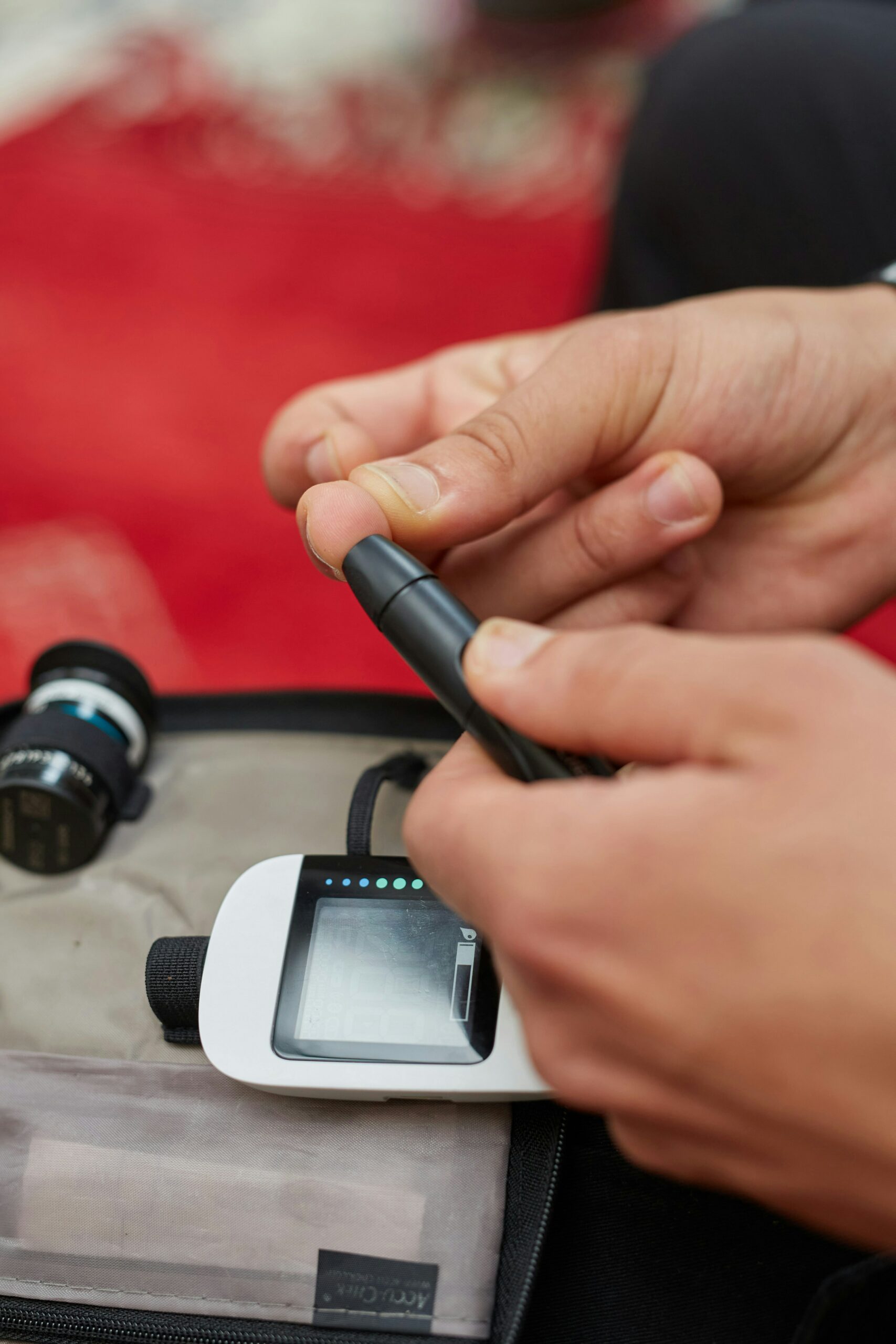
Photo by Sweet Life on Unsplash